
Redox balance is more than “less oxidation”
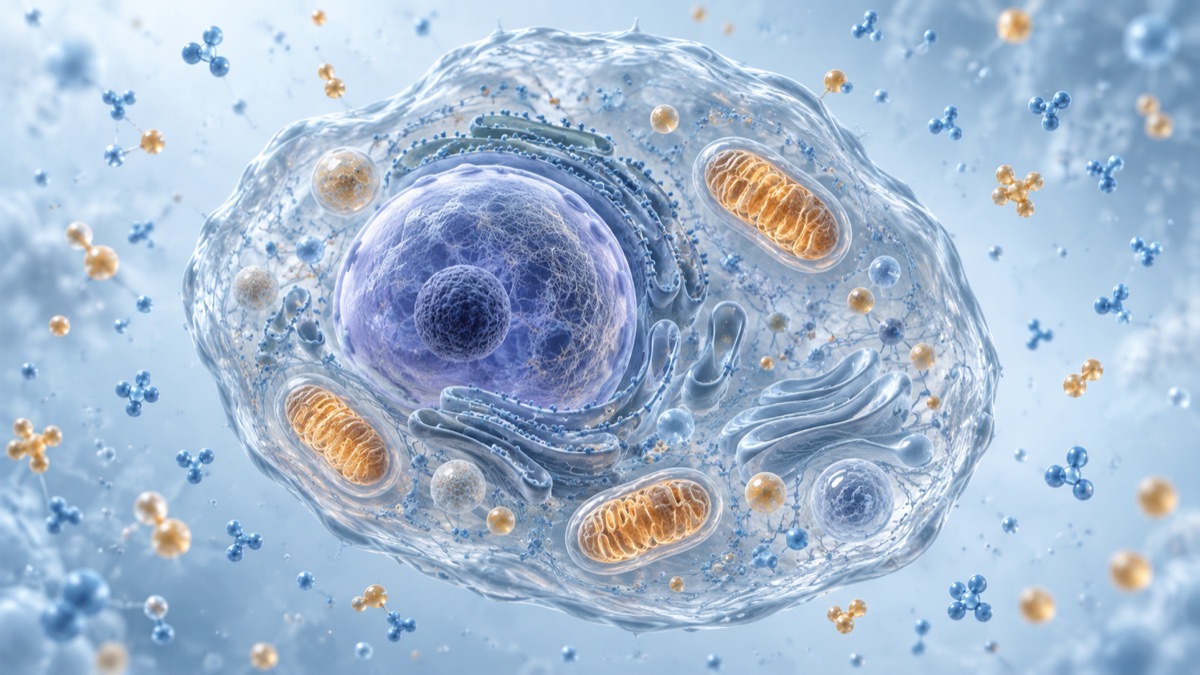
Reactive species: signals and potential stressors
Antioxidant enzymes and redox systems regulate responses
Controlled signalling supports cell function
Persistent imbalance can contribute to molecular damage
A network, not a single antioxidant
Glutathione, thioredoxin and enzyme systems help regulate different redox reactions. Their activities depend on location, substrates and reducing power. A measurement of total antioxidant capacity compresses a complex network into one laboratory result; it does not establish how every cell is functioning. [1]
Thioredoxin: a molecular example
Thioredoxin is a small redox-active protein. Cell experiments showed that its redox state affects binding to ASK1, a kinase involved in stress signalling and apoptosis. This connects redox control with cell decisions. It does not mean that raising thioredoxin universally improves health or that an oral ingredient reproduces this experiment. [2]
Regulated cell death has several routes
Apoptosis and ferroptosis are distinct regulated processes. Ferroptosis involves iron-dependent lipid oxidation; apoptosis uses a different molecular programme. Redox changes interact with these pathways, but one linear chain from oxidation to inflammation to disease is an oversimplification. Tissue, timing and the initiating injury change the outcome. [2] [3]
What would count as useful evidence?
A biochemical effect becomes a health claim only after suitable human testing. Ask whether a study measured pathway activity, a biomarker or an outcome people can feel or use. Exercise research provides one example of adaptation involving redox signals; it is not a reason to seek oxidative damage or to stop prescribed treatment. [4]
Sources & research context
- Sies H, Berndt C, Jones DP. Oxidative Stress. Annual Review of Biochemistry. 2017;86:715–748.
Mechanistic review
- Saitoh M et al. Mammalian thioredoxin is a direct inhibitor of apoptosis signal-regulating kinase (ASK) 1. EMBO Journal. 1998;17:2596–2606.
Cell and biochemical experiments
- Dixon SJ et al. Ferroptosis: an iron-dependent form of nonapoptotic cell death. Cell. 2012;149:1060–1072.
Preclinical experiments
- Ristow M et al. Antioxidants prevent health-promoting effects of physical exercise in humans. PNAS. 2009;106:8665–8670.
Human intervention · 4 weeks