Redox balance is more than “less oxidation”
Reactive species: signals and potential stressors
Antioxidant enzymes and redox systems regulate responses
Controlled signalling supports cell function
Persistent imbalance can contribute to molecular damage
A signal can become a burden
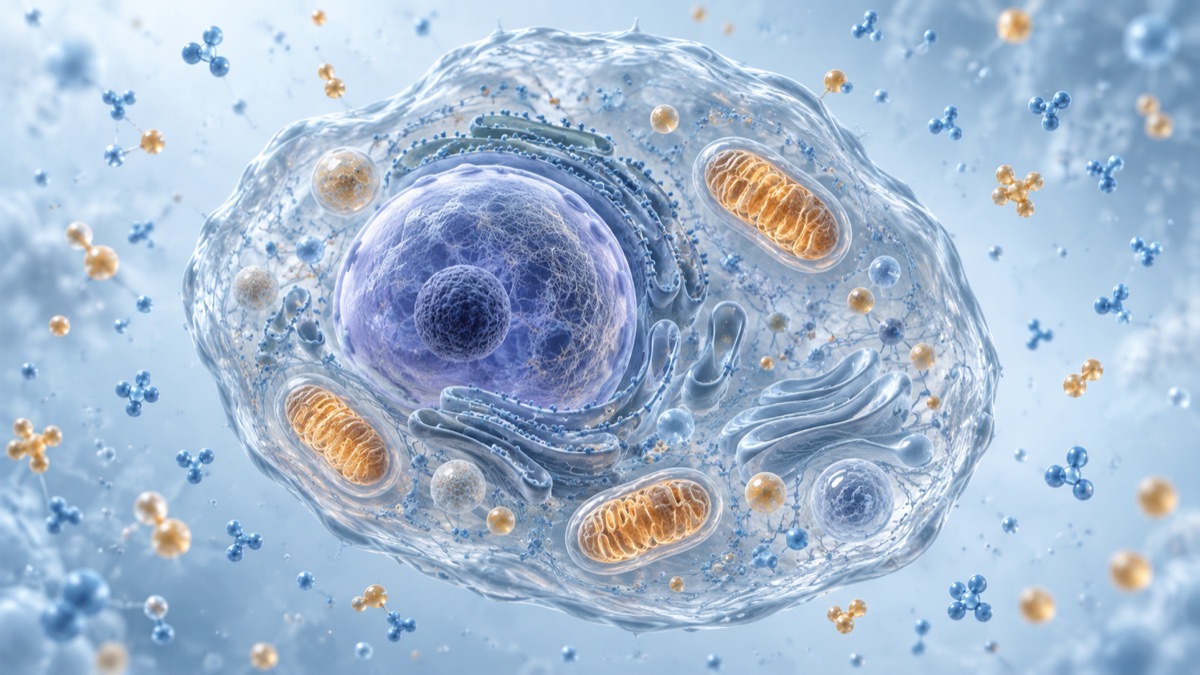
Cells produce and remove reactive species continuously. Controlled hydrogen peroxide signalling can alter protein activity; persistent or poorly controlled oxidation can damage lipids, proteins and DNA. These are related but different processes. A blood oxidation marker cannot describe every tissue or prove that it is the cause of a symptom. [1]
What an exercise study helps explain
In a 4-week study enrolling 40 young men, vitamin C (1,000 mg/day) plus vitamin E (400 IU/day) blunted selected training-related changes in insulin sensitivity and endogenous antioxidant defence. This illustrates why suppressing a signal need not improve adaptation. It does not show that every antioxidant, food source or dose has the same effect. [2]
Membranes, inflammation and cell death
Oxidation of membrane lipids is one link between redox biology and cell injury. Ferroptosis is a regulated form of cell death associated with iron-dependent lipid oxidation, first defined in experimental systems. This mechanism is not evidence that an antioxidant supplement prevents organ disease. [3]
How to use this knowledge
Ask what was measured: a chemical assay, a human biomarker or a clinical outcome. Then check the population, preparation, dose and duration. A lower laboratory marker can be informative without proving better daily function or longer life. [1] [2]
Sources & research context
- Sies H, Berndt C, Jones DP. Oxidative Stress. Annual Review of Biochemistry. 2017;86:715–748.
Mechanistic review
- Ristow M et al. Antioxidants prevent health-promoting effects of physical exercise in humans. PNAS. 2009;106:8665–8670.
Human intervention · 4 weeks
- Dixon SJ et al. Ferroptosis: an iron-dependent form of nonapoptotic cell death. Cell. 2012;149:1060–1072.
Preclinical experiments